

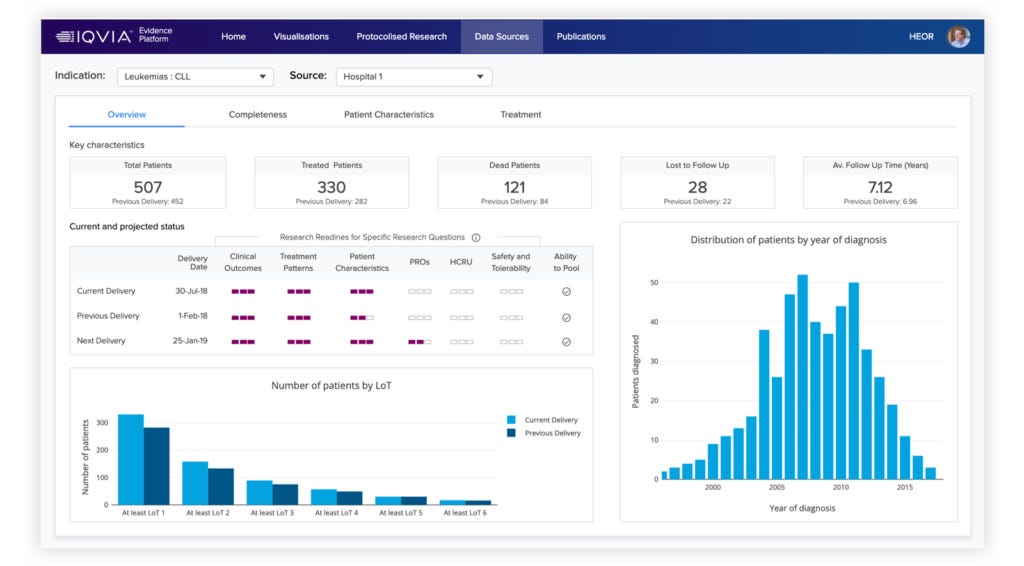
Designed a new product for IQVIA — a research tool giving Health Economics Outcomes Researchers, Commercial Pharma, and Hospital/Registry teams direct access to European real-world evidence, a market segment their existing domestic-data tools couldn’t serve due to EU data regulation.
The problem
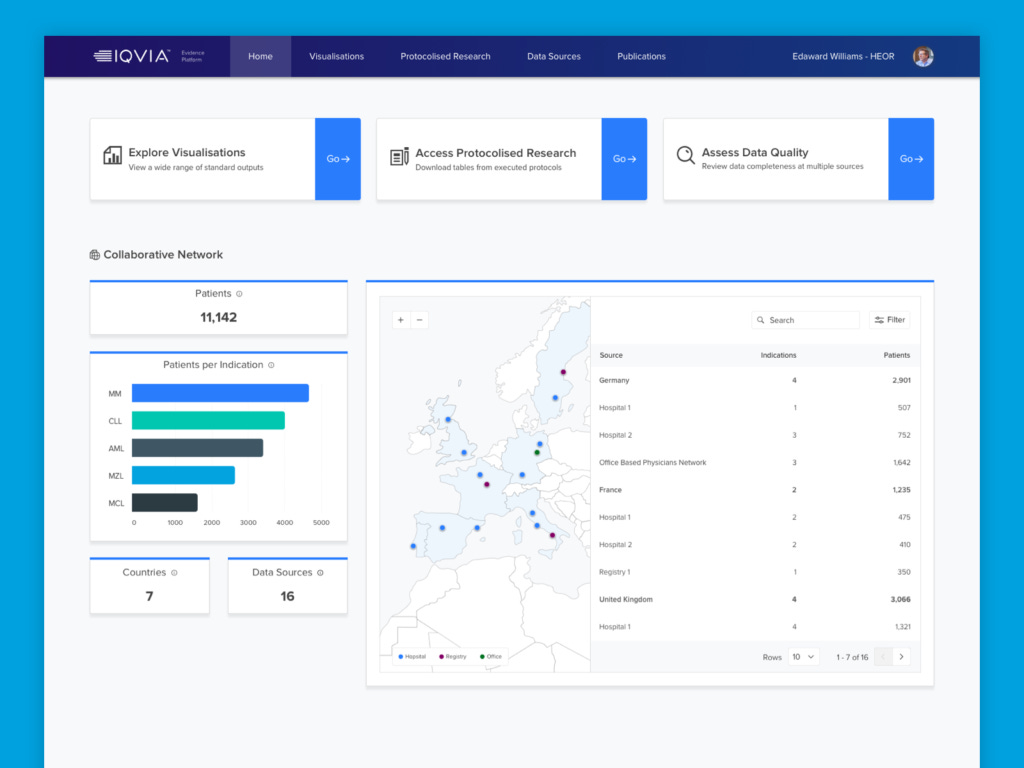
IQVIA’s existing tools worked well for domestic healthcare data but couldn’t meet the needs of global teams who required international datasets — European health data procurement carries regulatory constraints that don’t map onto the domestic model. IQVIA saw the gap as a new product opportunity, not just a feature extension.
The process
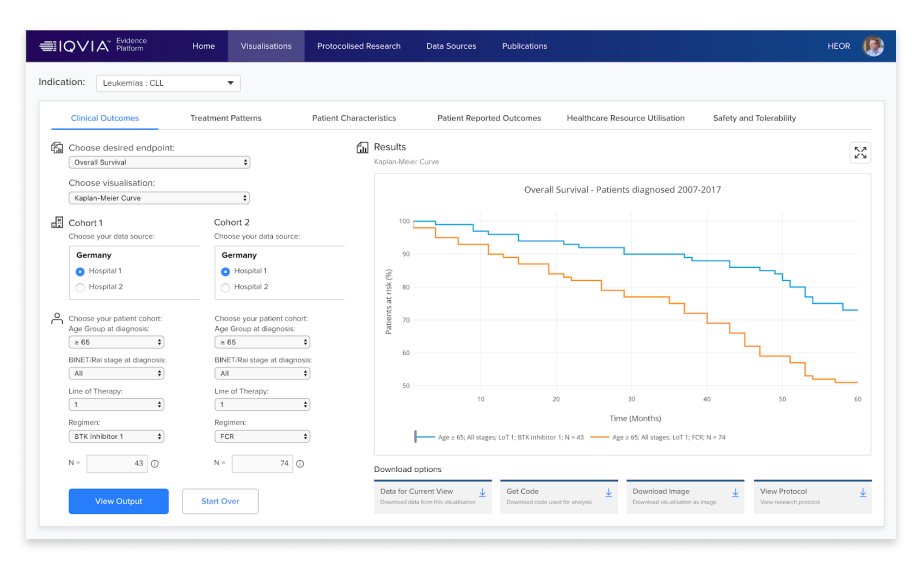
Started with stakeholder interviews to validate an existing starting concept, then built an interactive prototype (Justinmind) specifically to usability-test with real users before investing further. That testing surfaced five concrete problems: users didn’t understand the application’s context, struggled to complete tasks, wanted a high-level overview on the home page, needed clearer core functionality, and didn’t understand some of the terminology.
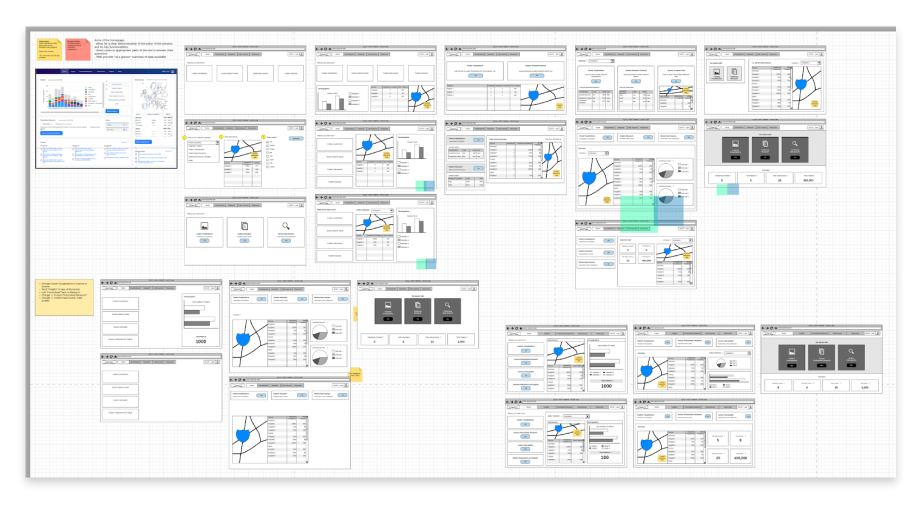
Those findings drove a full rework — brainstorming and whiteboarding sessions (LucidCharts) reshaped the concept into a more complete prototype, which became the basis for an MVP and a parallel proof-of-concept build. The same process then repeated for two more user roles (Commercial Pharma, Hospitals/Registries), moving faster the second time since requirements overlapped significantly with the first.
My role
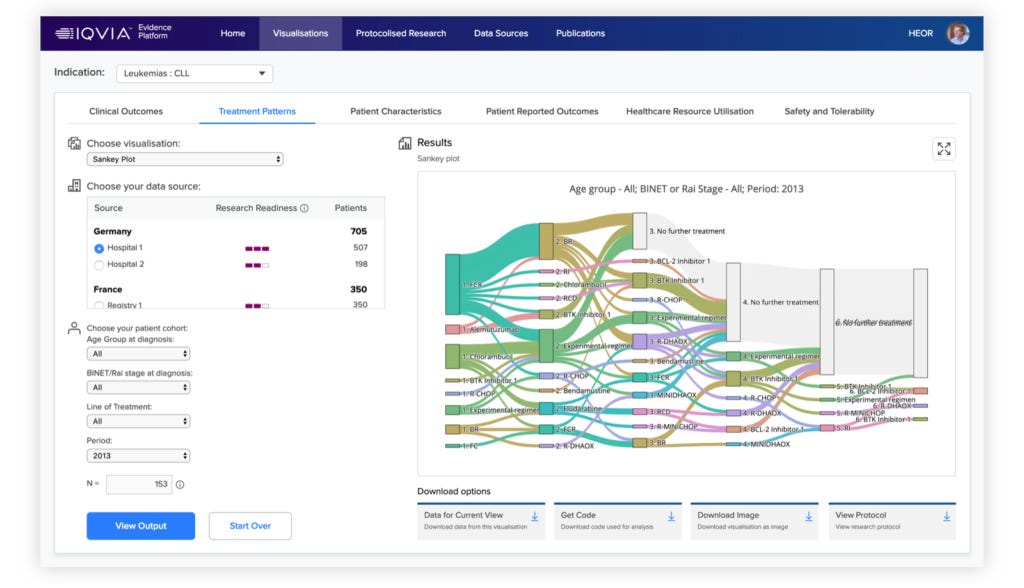
UX Designer, contracted to lead design on a three-person core team with a Product Owner and Marketing/Strategy lead. Owned wireframes, prototypes, and the usability testing that shaped the pivot.
The result
Delivered a functional prototype and proof-of-concept covering all three user roles, giving IQVIA a new product that lets users generate data visualizations, output research protocols, and assess data-source quality — none of which existed in their portfolio before. IQVIA’s internal year-one sales target for the product is $20M; that’s a target the prototype is meant to support, not a measured result of this work.
What I’d do differently
Significant work went into building the first prototype before testing it with real users — the usability issues we found afterward could have been caught with interviews upfront. Next time, user research comes before the build, not after.