

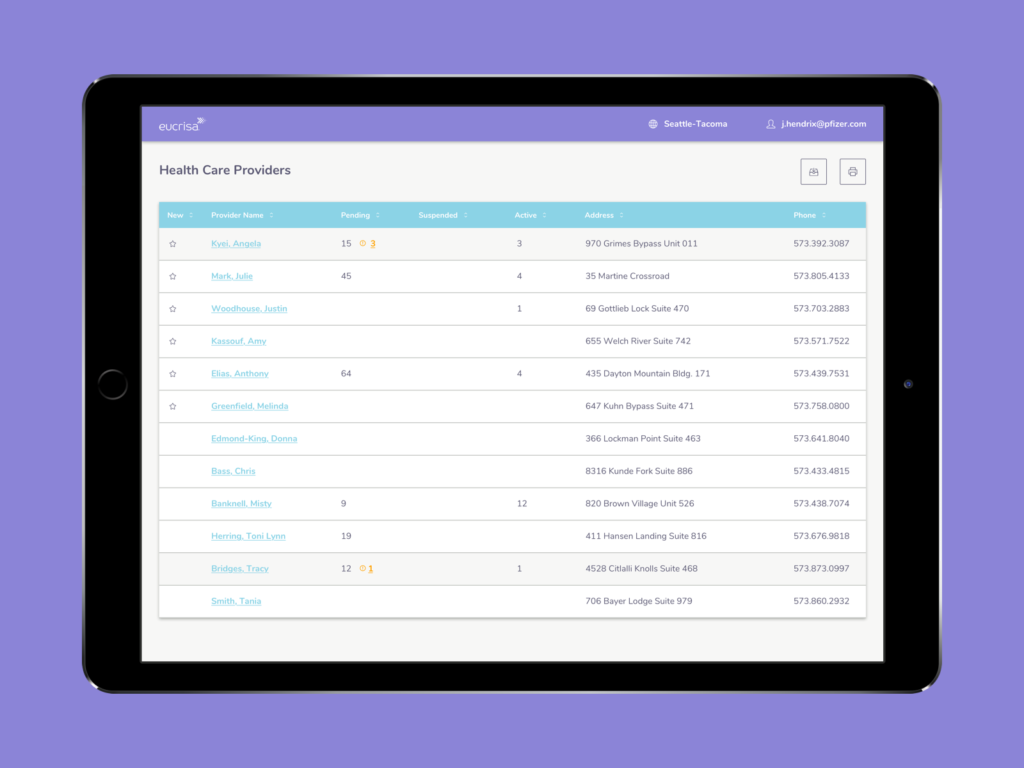
Replaced a daily spreadsheet-filtering workflow with a native iPad app that let Pfizer regional managers and sales reps see their action items directly, instead of manually filtering a shared spreadsheet by region and territory every day.
The problem
National sales data lived in a single dense spreadsheet, updated daily. Managers filtered it by region, then handed it down to reps who filtered again by territory — a manual, repetitive process that buried the actual action items (which patients needed follow-up, which cases were stalled) inside a format built for reporting, not fieldwork.
The process
Interviews with regional managers and reps surfaced two things that shaped everything after: the work happened almost entirely on iPad Pros in the field, and reps consistently struggled to identify what needed action versus what was just data. That became the core design constraint.
From there: brainstorming and rough sketches, then user flow diagrams and annotated wireframes to define the app’s structure, shared via InVision for iterative feedback. High-fidelity comps followed in Sketch once the structure held up. Built an interactive HTML/CSS/JS prototype that doubled as a functional artifact — used to push the project past proof-of-concept into implementation, at which point I supported front-end development directly.
My role
UX/UI Designer, paired with a UX researcher (Erik Johnson, Purpose UX). Owned the full design process — flows, wireframes, high-fidelity comps, and the interactive prototype — and stayed on through front-end implementation support.
The result
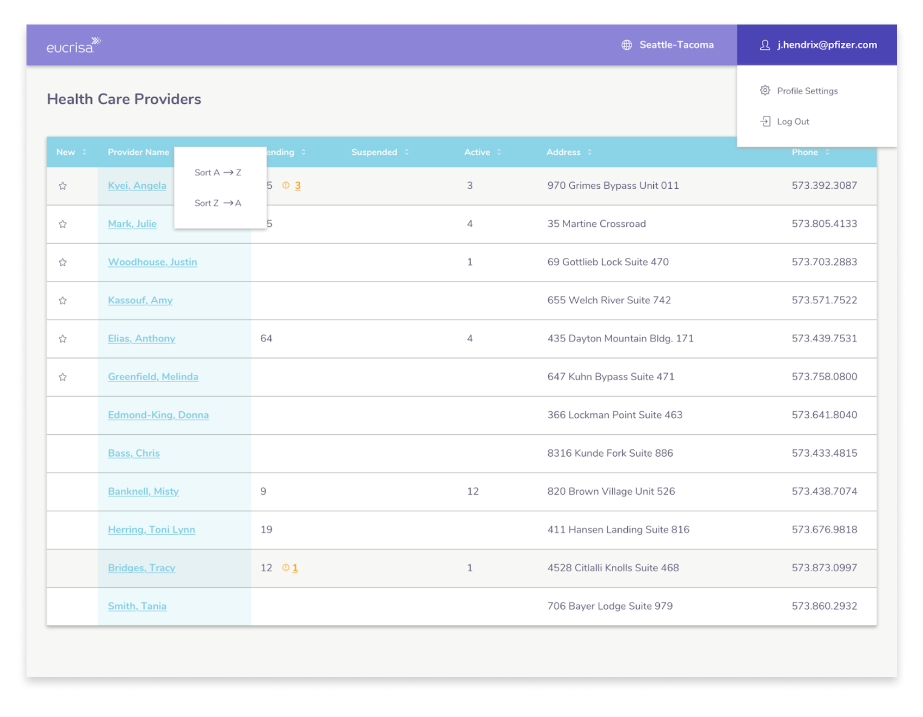
Delivered a working iPad application that gives reps direct access to their action items instead of manually filtering a spreadsheet — the specific problem interviews identified. Downstream effects (fewer duplicate calls, more cases closed, lower operating cost) are the expected result of removing that friction, not something we measured before handoff — no usability testing happened in this engagement.
What I’d do differently
Timeline and budget didn’t allow for usability testing, which means the core assumptions — what actually counts as an “action item” to a rep in the field — were never validated against real use. That’s the gap I’d close first given more room: test with reps before finalizing the case-flow logic, not after.