

Replaced a manual, opaque sourcing process with a self-service platform that gave buyers pricing transparency and gave manufacturers a direct, trusted channel to reach them — cutting the friction out of one of clinical research’s slowest supply chains.
The problem
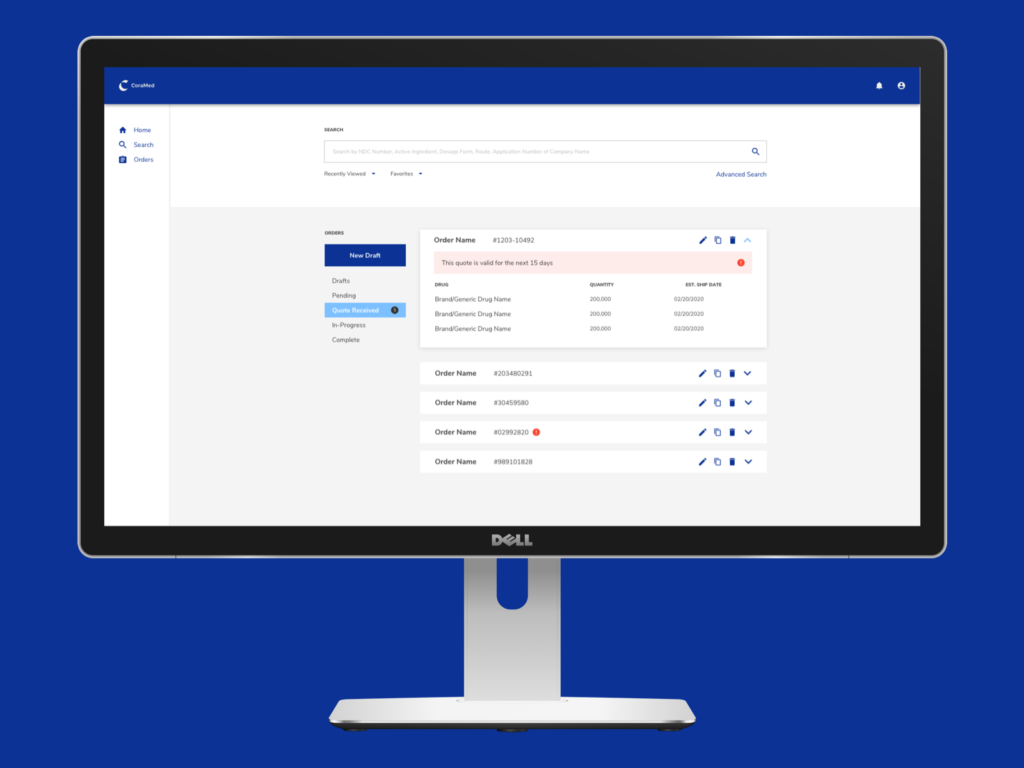
Sourcing comparator drugs for clinical trials meant delays, opaque pricing, and compliance risk. Buyers had no visibility into market pricing or supply. Manufacturers had no efficient way to reach qualified buyers. CoraMed saw the fix: connect the two sides directly.
The process
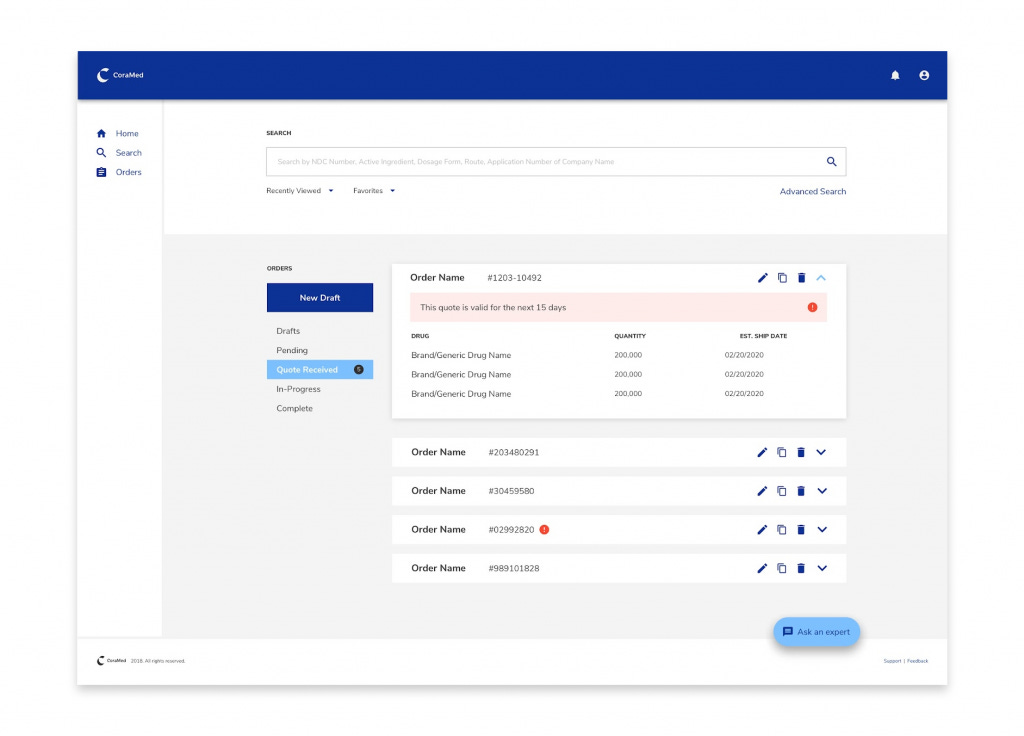
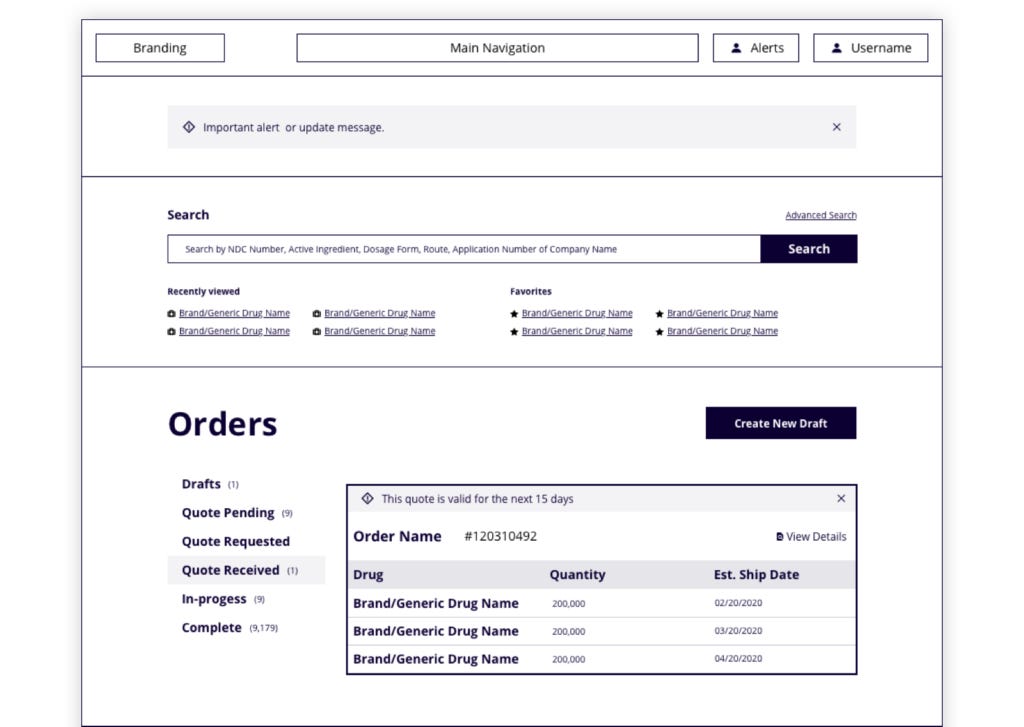
We worked in two phases. Phase one: buyer-side dashboards for sourcing strategy, pricing intelligence, and order management — built from low-fi wireframes through high-fidelity comps, validated in an interactive prototype at every step. Phase two: manufacturer workflows, shaped by a multi-day workshop — personas, affinity mapping, task flows — that surfaced what a trustworthy supply relationship actually required on their side.
Every phase moved from sketch to tested prototype before we committed to visual design. Fewer wrong assumptions, faster convergence.
My role
UX/UI designer on a three-person team, alongside a UX researcher and a second designer. Owned interaction design end-to-end — wireframes, comps, and the interactive prototype used to validate flows with both buyers and manufacturers.
The result
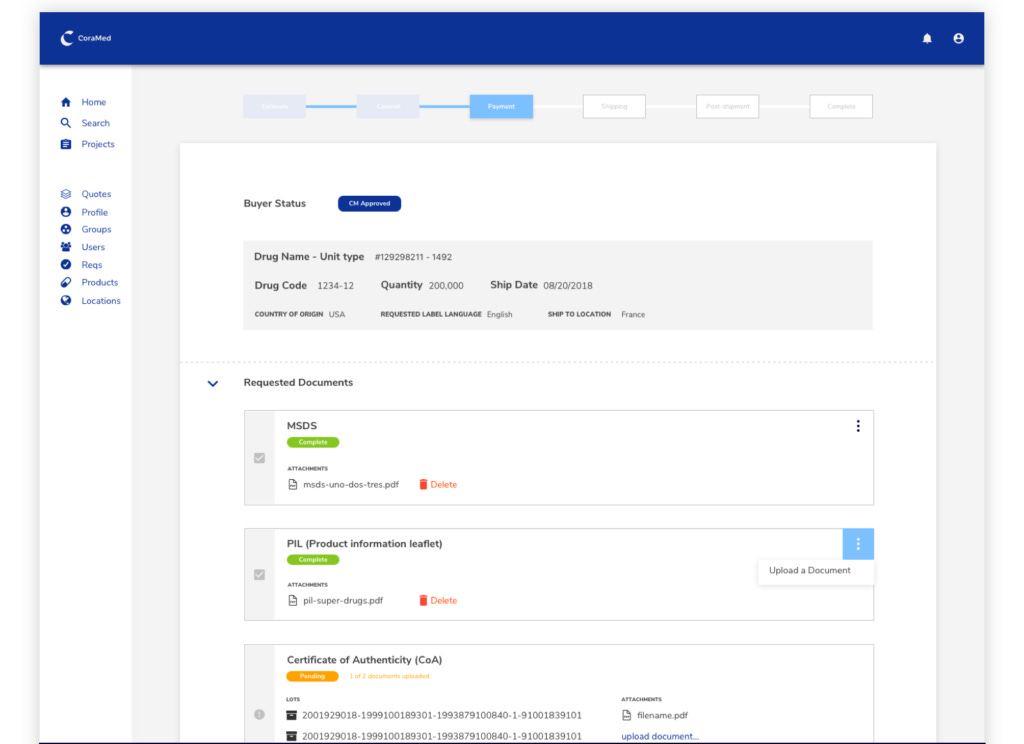
Buyers source faster, with real pricing visibility and compliance confidence. Manufacturers build supply relationships they can actually rely on. Less waste, faster trials, for an industry that had neither.